

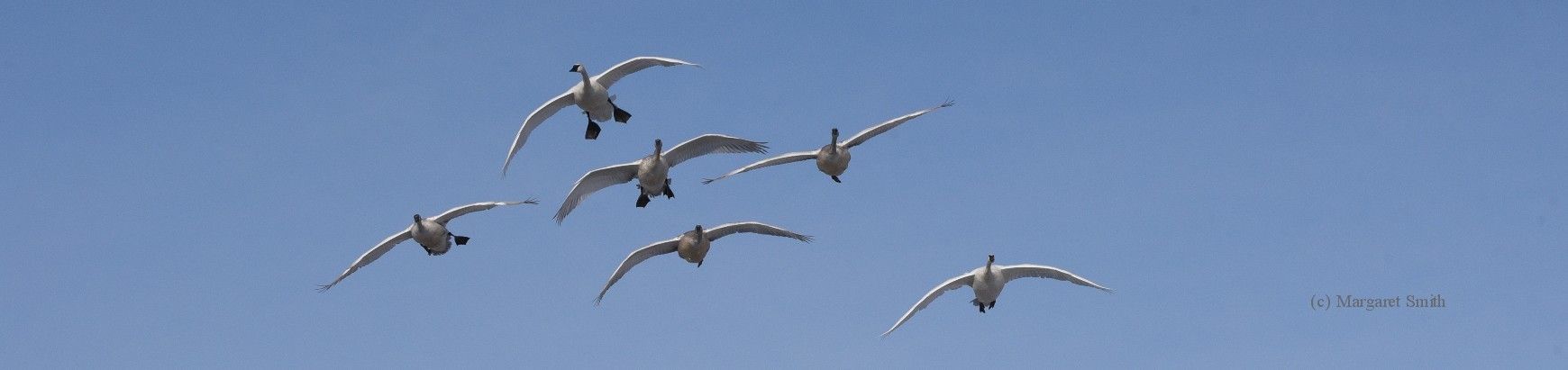
Photograph by Margaret Smith
TTSS Blog 2026
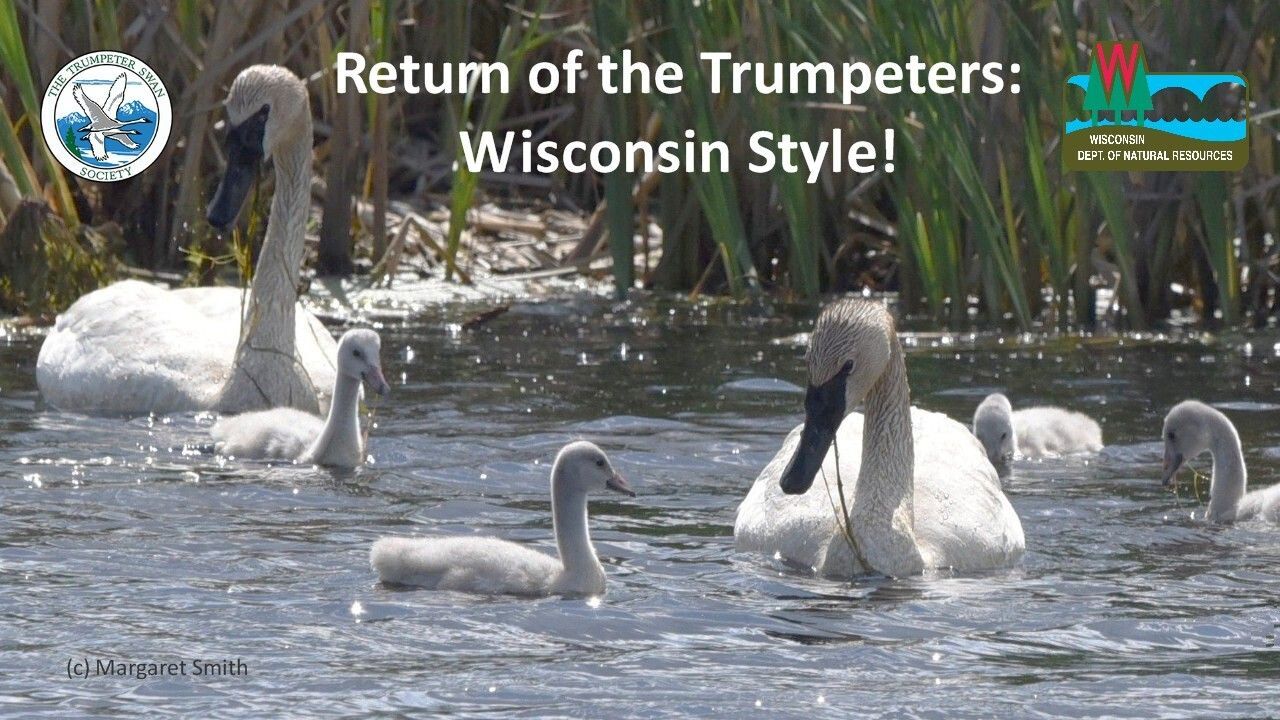
Sumner Matteson, of the Wisconsin Department of Natural Resources, led Wisconsin’s Trumpeter Swan Recovery program. In this webinar he shares the 40-year history of the return of trumpeter swans to the state and its unique story in the restoration of trumpeter swans in the Midwest.
You’ll discover what was involved in 9 years of egg collections in Alaska, and Wisconsin’s unique decoy-rearing and captive rearing of cygnets. Sumner explores the challenges and opportunities in monitoring the restoration flock.
He highlighted Wisconsin’s swans in the U of MN satellite telemetry study (GPS/GSM tracking) study.
April 30, 2026
"“The webinar was very interesting and informative. I particularly liked learning about the different kinds of rearing and release methods.”
BRITISH COLUMBIA: " Every spring in Vanderhoof, along the Nechako River, something remarkable takes place. Thousands of trumpeter swans arrive, and more people are beginning to notice.
More birders, photographers, and nature lovers are visiting Riverside Park, attracted by what many consider one of North America’s most spectacular wildlife events.
“The numbers were absolutely staggering,” said Clive Keen, a birding enthusiast who visits Vanderhoof each year to watch the migration. “If David Attenborough appeared at any moment, it wouldn’t be a surprise.”
ONTARIO: "Beverly Kingdon attracts an equal number of trumpeter swans and people when she visits LaSalle Marina.
Mother Swan – as she’s referred to by many – embodies her name.
All she has to do is drive around the corner, and the trumpeters know. They know her vehicle – a self-described monster of an SUV purchased specifically to handle four wired cages for her beloved swans’ travels as needed for vetting. The swans know her voice and her mannerisms. And boy does she know them – not as the yellow-numbers affixed by one of her fellow Trumpeter Swan Conservation Ontario (TSCO) volunteers. At one time, she could handily recite their full name, and when they became part of the program, along with their mates, and their offspring." Read more
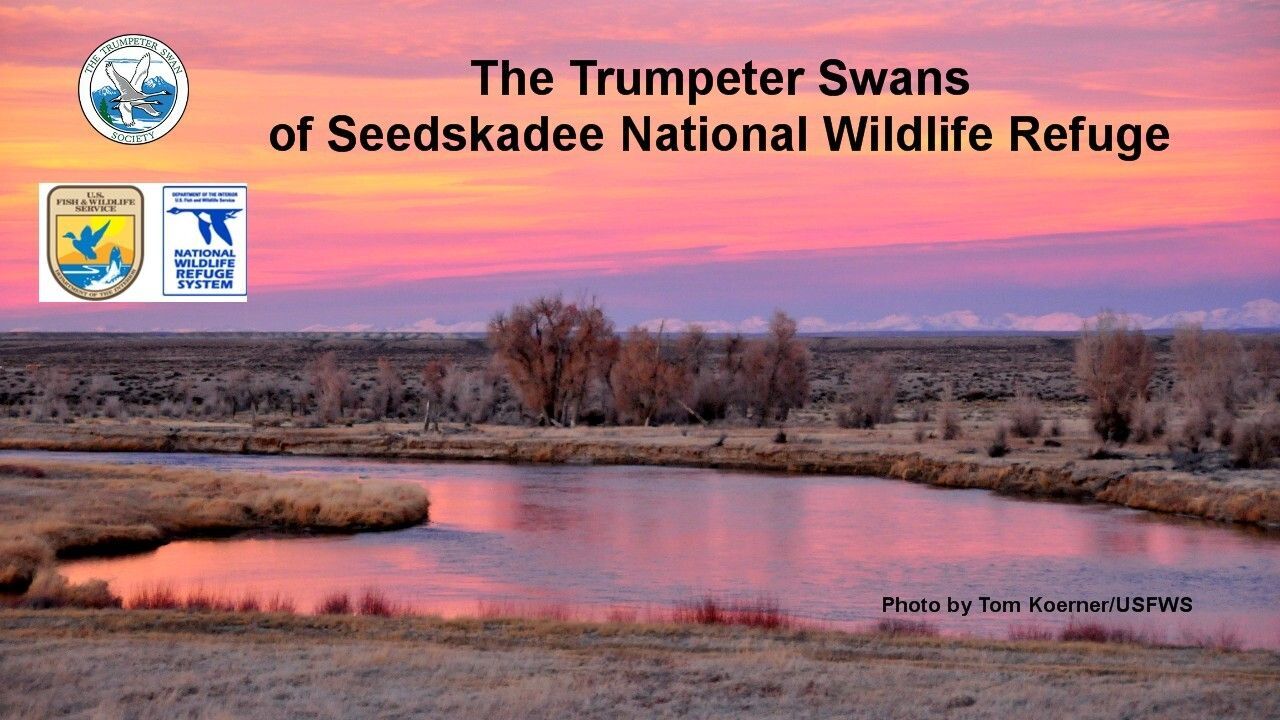
t would be easy to miss the 25,000-acre Seedskadee National Wildlife Refuge. Hidden in southwest Wyoming, almost 40 miles north of the town of Green River, this refuge is in the middle of a sagebrush sea. This high-desert refuge, created as mitigation for the construction of the Fontenelle Dam, is teeming with life. That life includes Trumpeter Swans and a unique story about how the building of a dam and a refuge led to four seasons of “desert swans”.
NEW YORK, NEW YORK: "BROOKLYN (WABC) -- New York City is a big place, with a lot going on, but somehow we get to celebrate some "firsts."
On Tuesday, Brooklyn recorded its first-ever documented sighting of a Trumpeter Swan.
"I've never seen one before. It was really exciting, and when I heard about it, I had to come down and take a look," bird lover Mariah Tarvainem said.
The swan was enjoying the East River by the North 5th Street Pier and Park in Williamsburg, Brooklyn. "I personally have never gotten a Trumpeter reported from New York City. So this is the first time," Margaret Smith said. Smith is the Executive Director of the Trumpeter Swan Society based in Minnesota.
Read more and see a video story of the rare swan...
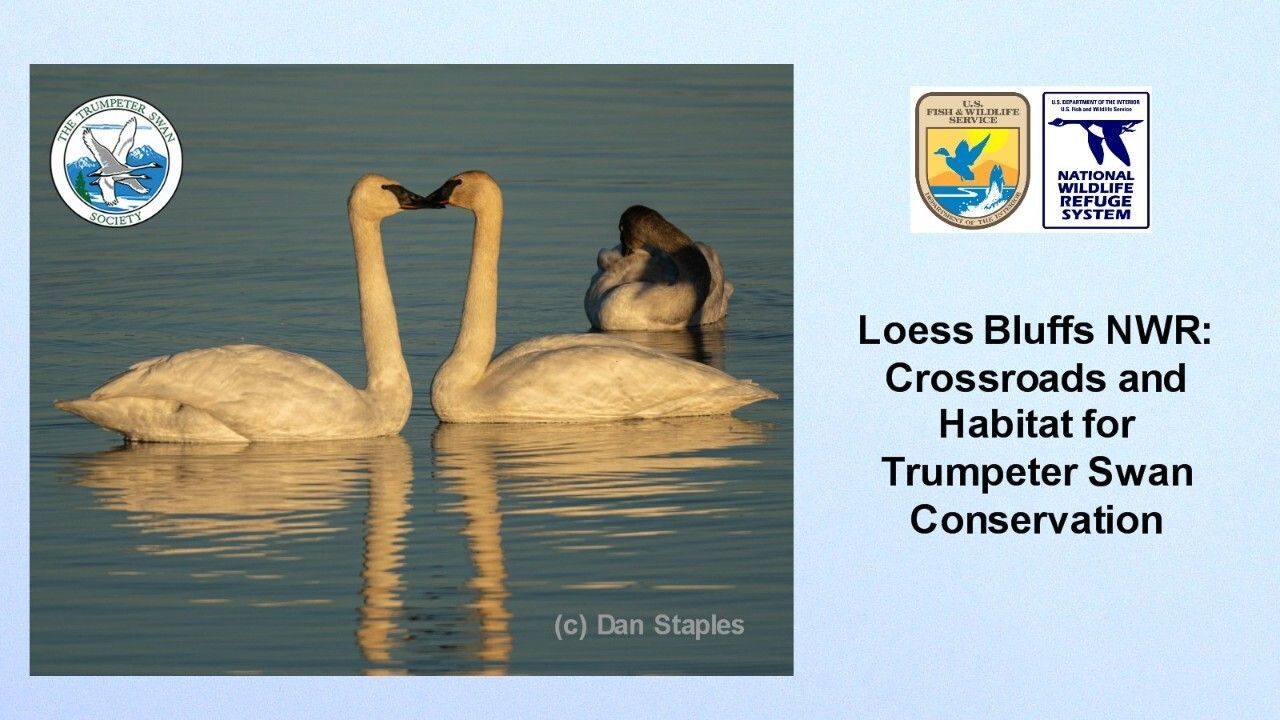
Established in 1935, Loess Bluffs National Wildlife Refuge has become one of the most significant wintering and migration stopover sites for trumpeter swans in the central United States. Through careful wetland management and protection, the refuge has provided critical habitat for swans returning from the brink of extinction, while also supporting hundreds of other bird species and a wide array of wildlife that depend on healthy floodplain ecosystems.
In this webinar, you'll learn about Loess Bluffs NWR, wetland management, and trends in trumpeter swan numbers over the years.
Feb. 19, 2026
"So interesting & informative, enjoyed seeing photos & videos learning about colors on various swans, how wildlife management works & all the pieces fit together- fascinating!"
"If you’ve ever rounded a bend in a Wyoming river on a frosty morning and suddenly found yourself face to face with a bird that looks like it belongs on a medieval coat of arms, congratulations—you may have met the Trumpeter Swan. Towering, snow-white, and impossibly elegant, this is the largest waterfowl in the world, a bird so impressive it seems almost mythical. Yet its story in the West is one of grit, recovery, and a whole lot of wetland real estate.
Trumpeter Swans (Cygnus buccinator) once ruled wetlands across much of North America, from Alaska to the Great Plains and into the northern Rockies. By the early 1900s, however, market and subsistence hunting had pushed them to the brink. By the time conservationists took stock, fewer than a couple hundred birds clung to survival near Yellowstone and in interior Canada.
Fast forward to modern Wyoming, and the picture—while still delicate—is far brighter. These swans are now managed as part of the Rocky Mountain Population (RMP) under the Pacific Flyway. Though a Tri-State Area flock was once considered for Endangered Species Act listing, federal biologists ultimately decided it didn’t qualify as a separate Distinct Population Segment. Translation: the birds stayed protected, but their recovery would depend on smart management rather than emergency listing...."Trumpeter Swans are living proof that conservation can work—even for a species once nearly erased from the map. Spotting one gliding across a Wyoming wetland isn’t just a wildlife sighting; it’s a glimpse of a hard-won recovery still unfolding. Big bird, big wings, big story—and Wyoming is right in the middle of it.
Read more...
ARKANSAS: "Each winter, hundreds of massive white trumpeter swans migrate to Magness Lake near Heber Springs, making the area one of Arkansas’ most unique and popular wildlife viewing destinations. The swans typically arrive around Thanksgiving and remain through Valentine’s Day, offering visitors a rare chance to see North America’s largest waterfowl up close." Read more...


