

Photograph (c) Yellowstone National Park
ROCKY MOUNTAIN POPULATION
Today, less than 20 percent of all continental Trumpeter Swans nest, breed, or winter in the Rocky Mountain Population (RMP). In 2015, there were a reported 11,700 Trumpeter Swans in the RMP.
The majority (95%) of the Rocky Mountain Population nests in Northern Alberta, British Columbia and the Yukon Territory. For the most part this group migrates to the tri-state region of Montana, Idaho and Wyoming for the winter, joining a small population (nearly 550 white birds) of non-migratory Trumpeters that nest in the region. In 2015, there were an additional 216 white swans in the "Other Flocks" of the United States RMP. The RMP is generally divided into three main flocks: Canadian, Tri-State/Greater Yellowstone area, and "Other Flocks."
United States RMP of special concern
The United States's RMP of less than 800 white swans is of particular concern.
United States RMP flocks include swans that nest in the Greater Yellowstone region of Montana, Wyoming, and Idaho. In winter, they are joined by several thousand swans from the Canadian flock, putting pressure on the limited areas with open water and available food.
The "Other Flocks" in the US RMP are restoration flocks in Oregon (Summer Lake Wildlife Area of Oregon and Malheur National Wildlife Refuge), Nevada (Ruby Lakes National Wildlife Refuge), eastern Washington (Turnbull National Wildlife Refuge) and Montana (the Flathead Valley and the Blackfoot Valley).
We are continuing our partnership work to increase the number of Trumpeter Swans in the US RMP through
- our membership on the Swan Technical Committee of the Pacific Flyway where swan management decisions and goals are made
- our partnership in the Oregon Restoration Project
- our participation in the Greater Yellowstone Working Group of the Pacific Flyway
The major threats facing Trumpeter Swans in the RMP are:
- Flock isolation and lack of connectivity between the United States flocks
- Changing hydrology negatively affecting nesting wetlands
- Harsh weather conditions that often include severe winters and cold, wet springs depressing nesting attempts and success
- Limited winter habitat
- Marginal habitat limiting suitable nesting territories
-
Swan populations, including the Rocky Mountain Population

The three flocks of the Rocky Mountain Population are Canadian (green), Tri-State/ Greater Yellowstone area (blue) and "Other" restoration flocks (purple).
Map from United States Fish and Wildlife Service 2015 North American Trumpeter Swan Survey -
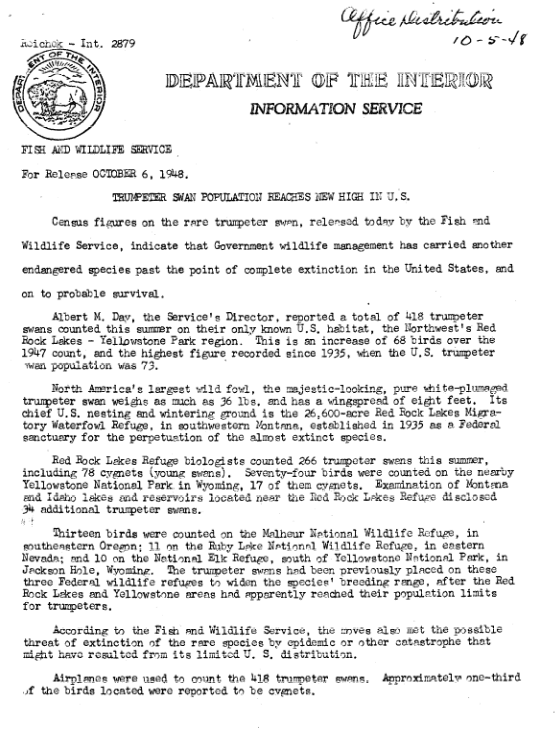
A 'good news' bulletin from the Dept. of Interior with updated trumpeter swan numbers for North America showing 'Government wildlife management has carried another endangered species past the point of complete extinction in the United States, and on to probable survival." There are swan counts for Yellowstone National Park, Red Rock Lakes National Wildlife Refuge, Malheur, Ruby Lake and National Elk National Wildlife Refuges. There are also counts from British Columbia and Alberta.
-
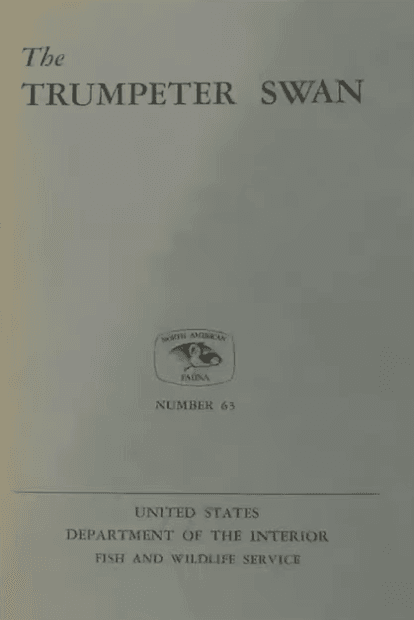
You can download Winston Banko's classic 1960 monograph about Trumpeter Swans. He was past manager at Red Rock Lakes National Wildlife Refuge. His book was a compendium of just about everything known about Trumpeters at the time. It is still extremely accurate. His monograph is still used by swan managers today!
-
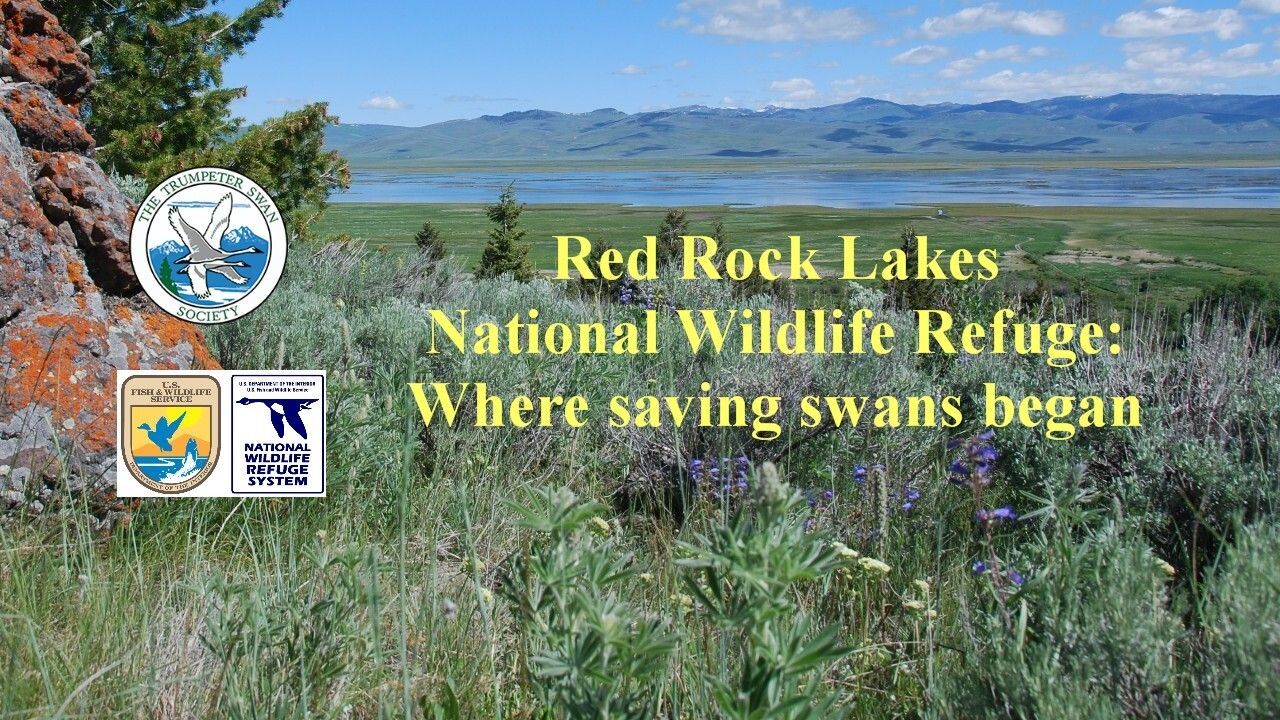
Discover the pivotal role this wild and beautiful refuge played in saving trumpeter swans.
Presenter: Bill West, Retired Red Rock Lakes National Wildlife Refuge Manager
-
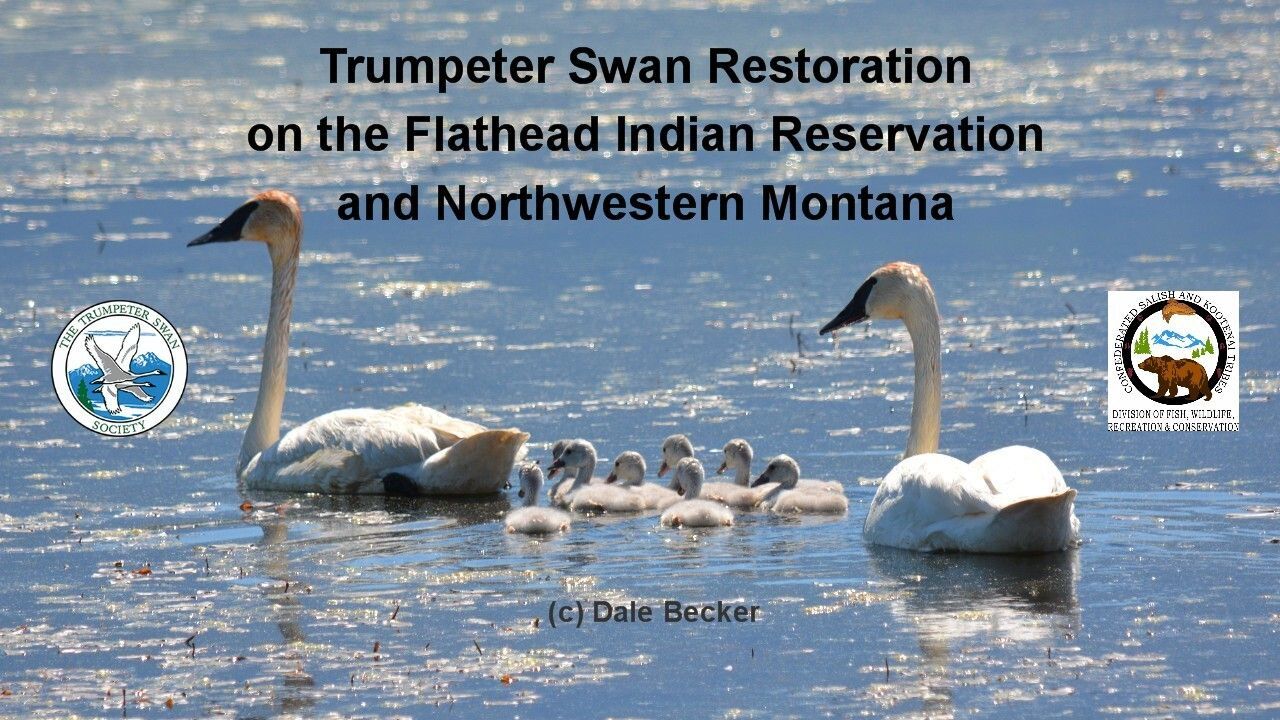
The Confederated Salish and Kootenai Tribes' Wildlife Management Program initiated a project to reintroduce Trumpeter Swans on the Flathead Indian Reservation in northwestern Montana in the late 1990s. The project used captive-propagated swans for reintroduction from 2000-2019. The presentation documents the history of the project, problem-solving and habitat management actions that benefited Trumpeter Swans.
-

Discover the rich history of trumpeter swans in Yellowstone, a haven celebrated for its unique geothermal wonders and charismatic wildlife. Journey through the ebbs and flows of swan populations within the park, from their flourishing numbers before the 1960s to the challenges faced in recent decades.
-

In this 2021 interview, Doug Smith shares the story of the iconic trumpeter swan- its heyday before the 1960s, the decline, and the restoration program.
-
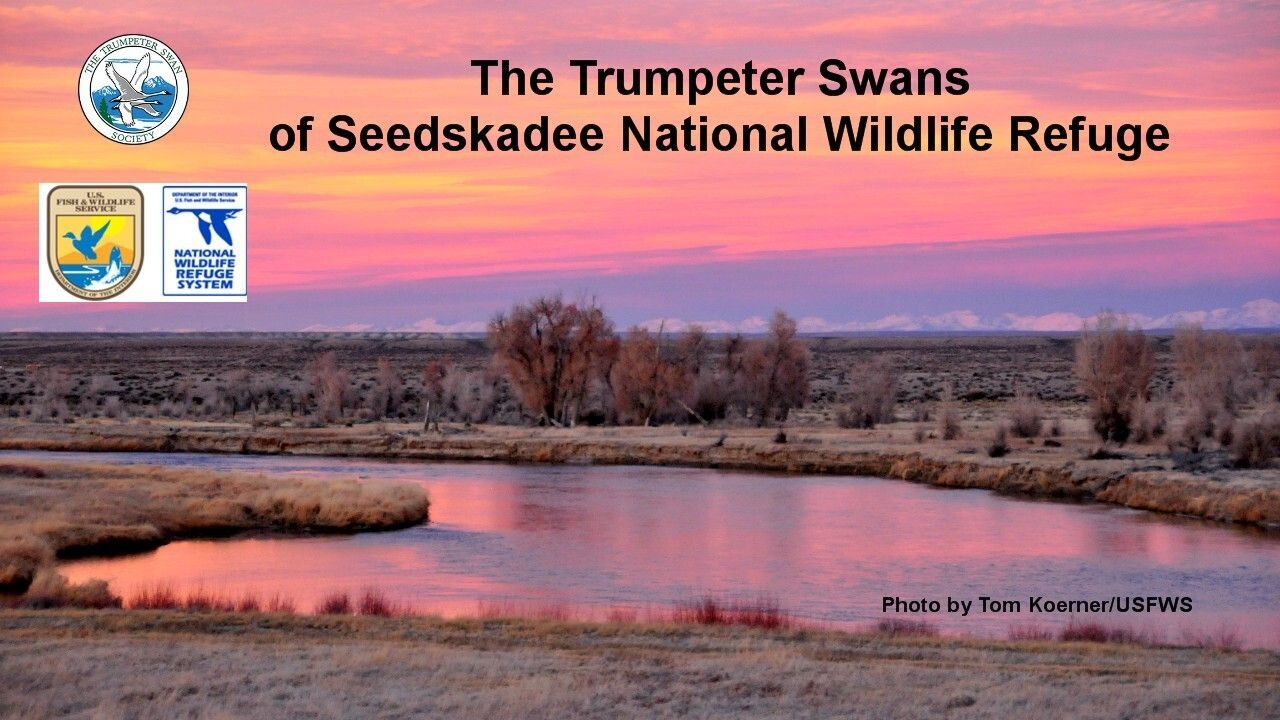
It would be easy to miss the 25,000-acre Seedskadee National Wildlife Refuge. Hidden in southwest Wyoming, almost 40 miles north of the town of Green River, this refuge is in the middle of a sagebrush sea. This high-desert refuge, created as mitigation for the construction of the Fontenelle Dam, is teeming with life. That life includes Trumpeter Swans and a unique story about how the building of a dam and a refuge led to four seasons of “desert swans”.
-

Dive into the world of Rocky Mountain swans in this webinar, "Swan Central- Harriman State Park of Idaho." Learn about the park’s role as a sanctuary for nesting trumpeter swans and a crucial wintering ground for Rocky Mountain swans from the USA and Canada.
-

This webinar highlights how and where the 23 Oregon swans were captured and collared with GPS/GSM collars. Then we explore some of the results, teaching you how to use GoogleEarth and the GPS data to discover:
• How to see the wetlands where the swans were captured and collared- from a bird’s eye view to a landscape street view.
• How to do simple calculations like a biologist to determine flight speed, temperatures, distances and altitude.This webinar is a teaching resource for the educational packet about the Oregon GPS tracking research project.
-

This remarkable male swan at Turnbull National Wildlife Refuge in eastern Washington left a legacy of swan longevity against amazing odds. Read the story of "Solo", a male swan that lived an estimated 45+ years, more than twenty years alone. Photograph by Carlene Hardt

Oregon Restoration Project

Photograph by Martin St. Louis, Oregon Department of Fish and Wildlife
Most of the swans released in the Oregon Restoration Project are cygnets. This is the first successful nesting pair of Trumpeter Swan released as cygnets themselves in Oregon several years before.
We are a partner in the Oregon Restoration Project. We partner with the Oregon Department of Fish and Wildlife and the United States Fish and Wildlife Service to bring Trumpeter Swans back to Oregon where they had been missing for decades.
In 2009, we began releasing Trumpeter Swans at Summer Lake Wildlife Area with a goal of restoring a healthy, viable, and sustainable breeding population of Trumpeter Swans to eastern Oregon.
By December 2018 the Project has released a total of 116 Trumpeters at Summer Lake Wildlife Area. Trumpeter Swans in the project receive green neck collars for tracking.
Your donation to the Oregon Restoration Project helps bring Trumpeter Swans back to Oregon.
GREATER YELLOWSTONE ECOSYSTEM
The Trumpeter Swans that nest in the Greater Yellowstone region of Idaho, Montana, and Wyoming in and surrounding Yellowstone National Park were the only group that survived in the U.S. south of Canada by 1930 as Trumpeters neared extinction. These Greater Yellowstone swans are one of the best-known icons of North American wildlife conservation and treasured by thousands who read E. B. White's "Trumpet of the Swan" in their school days.
During the past few decades their nesting effort and adult numbers have risen very slowly and these swans face significant threats including isolation, winter habitat scarcity, and changing hydrology reducing wetland suitability.
TTSS continues its decades-long work with regional partners to address these serious issues.
-
This interview with Doug Smith in 2021 tells the story of the rise and fall of trumpeter swans in the Park, and the impact of its restoration program.
-
Map of Greater Yellowstone/Tri-State area

Pink regions on the map are swan habitat in the Greater Yellowstone Ecosystem/Tri-State Area
-

In 1932 Yellowstone National Park was one of three areas the National Park Service documented as having Trumpeter Swans. The Park has seen a decline in the number of swans in the past few decades and is working to restore Trumpeter Swans.
Yellowstone National Park
In 1932 Yellowstone National Park was one of three areas the National Park Service documented as having Trumpeter Swans. The Park has seen a decline in the number of swans in the past few decades and is working to restore Trumpeter Swans. In 2017, there were only two nesting pairs of Trumpeter Swans in the Park. TTSS is a partner with the Park on swan issues. Photograph by Margaret Smith
-

For more swan viewing sites, check the Greater Yellowstone Ecosystem Map. Harriman State Park, near Island Park, Idaho, has nesting and wintering swans with easy viewing. Photograph by Sarah Jackson
Harriman State Park, Idaho
Idaho's Harriman State Park, near Island Park, has nesting and wintering swans with easy viewing.
Photograph by Sarah Jackson, wintering swans at Silver Lake, Harriman State Park -

This appeared as a report at the second North American Wildlife Conference in 1936. The collective efforts of all involved have brought Trumpeter Swans a long, long way since then. Read about the early efforts at Red Rock Lakes and the Yellowstone region.


